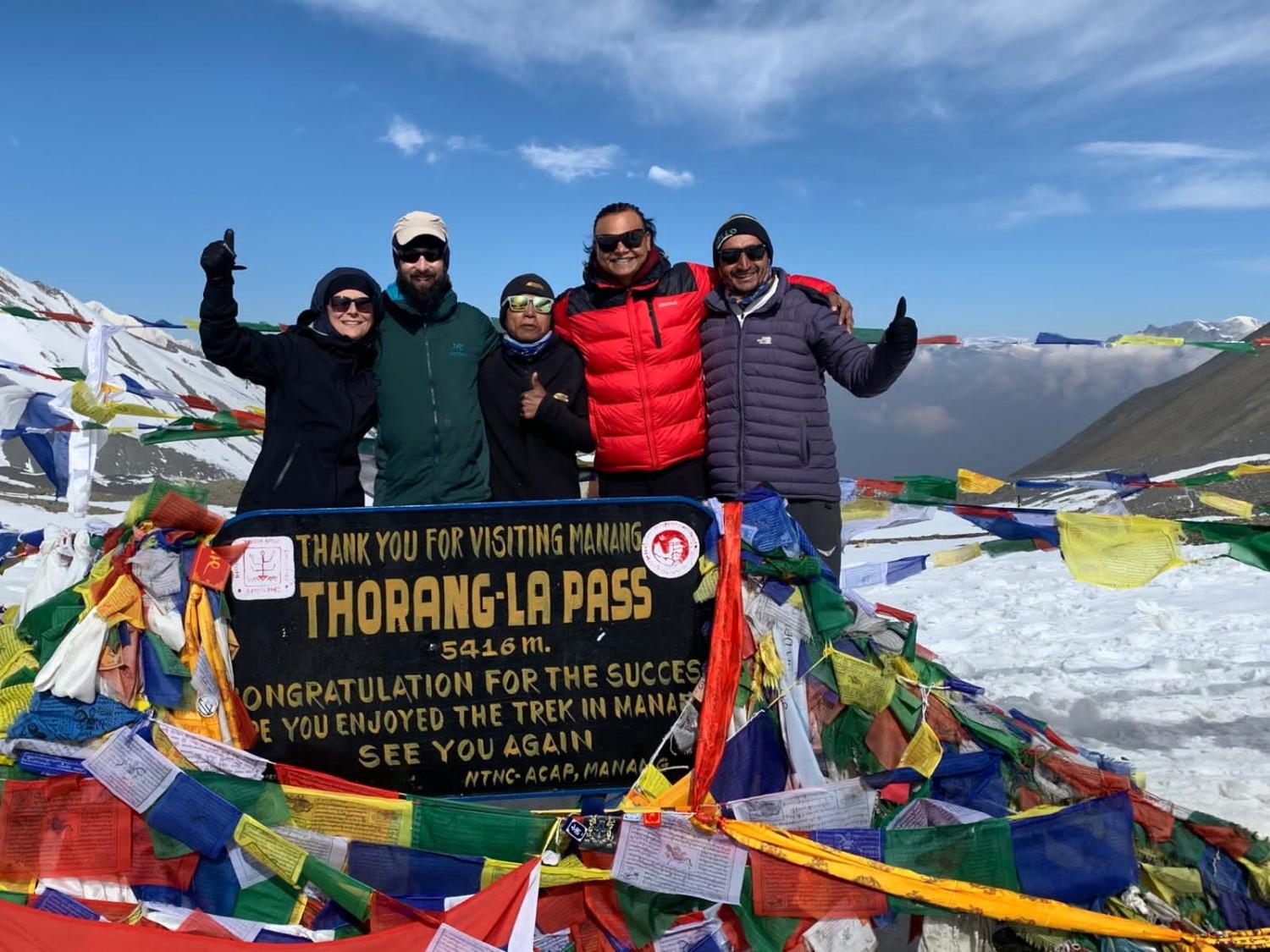
Manaslu Circuit and Annapurna Circuit Trek – 20 Days

Explore the Manaslu Circuit and Annapurna Circuit Trek, an unforgettable 20-day Himalayan adventure combining two of Nepal’s remarkable trekking regions. The journey takes you through the remote Manaslu region, along the Budhi Gandaki Valley, across the challenging Larkya La Pass, and onward to the Annapurna Circuit through Dharapani, Manang, and Thorong La. Experience dramatic mountain landscapes, traditional villages, Buddhist culture, diverse Himalayan scenery, and the sacred town of Muktinath along the way.

Trip Facts

Trip Code MCT & ACT
Duration 20 Days Days
Max. Altitude: 5,416 m.
Group size 1 - 12 Pax
Best Time for Visit Spring & Autumn
Activity Trekking & Hiking
Meals N/A
DIFFICULTY Strenuous
TRANSPORTATION Private Jeep & Public Bus
LOCATION Manaslu Region
Trip Starts Kathmandu, Nepal
Trip Ends Kathmandu, Nepal

Manaslu and Annapurna Circuit Trek Highlights

  • Trek through the spectacular Manaslu region of Nepal
  • Explore the remote Manaslu Circuit
  • Enjoy close views of Mount Manaslu (8,163m)
  • Cross the challenging Larkya La Pass
  • Experience traditional Tibetan Buddhist culture
  • Visit beautiful mountain villages including Jagat, Deng, Namrung, Lho, Sama Gaon and Samdo
  • Explore the high Himalayan settlement of Sama Gaon
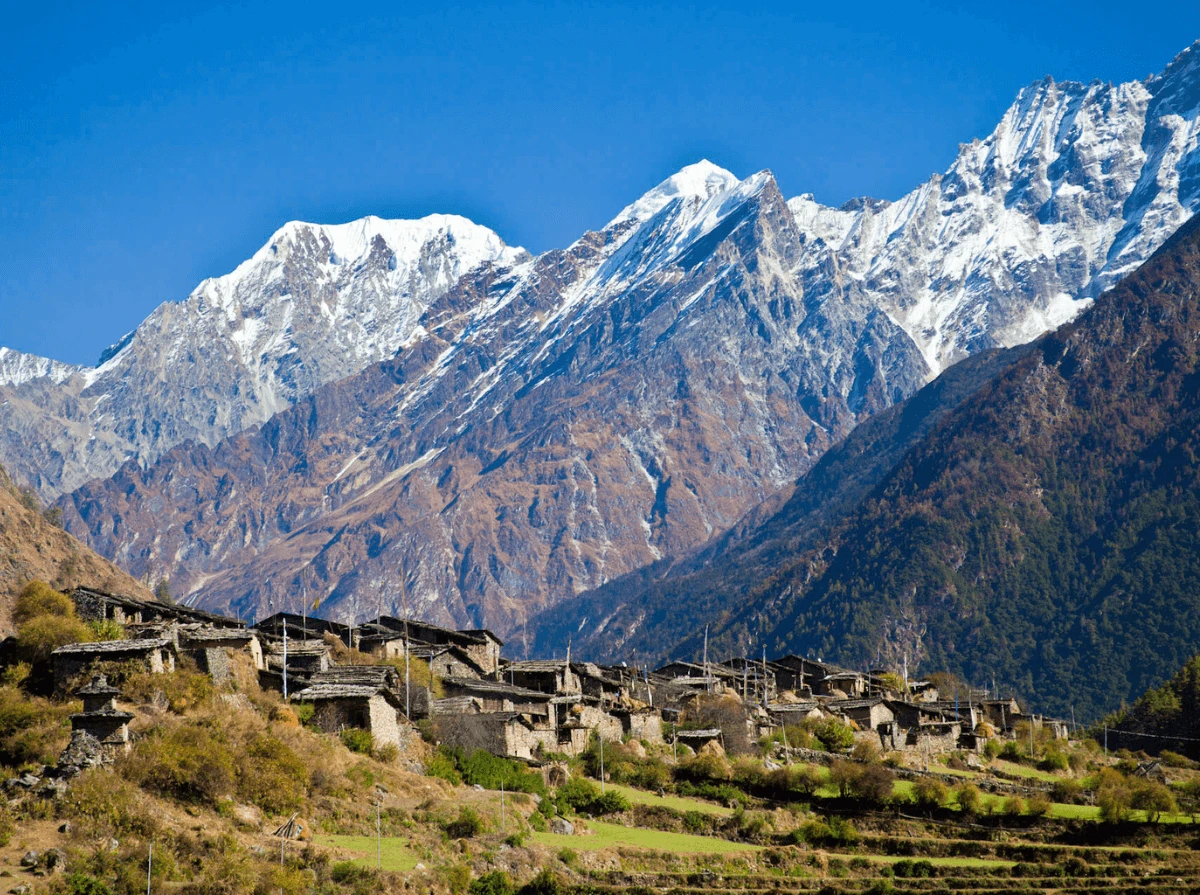
  • Experience stunning views of Manaslu, Himalchuli, Ngadi Chuli, Ganesh Himal and surrounding peaks
  • Continue from Dharapani into the Annapurna Circuit
  • Explore Chame, Pisang and Manang
  • Enjoy an acclimatization experience around Manang
  • Cross the famous Thorong La Pass (5,416m)
  • Experience diverse landscapes from subtropical valleys to high alpine terrain
  • Combine two famous trekking circuits without repeating the same trail
  • Experience Himalayan culture, nature and adventure in one extended trek

Overview

Manaslu Circuit and Annapurna Circuit Trek is a long-distance Himalayan journey that links two remarkable mountain landscapes in Nepal. The adventure begins in the remote Manaslu region, follows the Budhi Gandaki Valley toward the high Himalayas, crosses the dramatic Larkya La Pass, and then continues from Dharapani into the classic Annapurna Circuit.

Rather than treating Manaslu and Annapurna as two unrelated trekking holidays, this itinerary follows the natural geographical connection between them. You experience the quieter villages and Tibetan-influenced culture of the Manaslu region first, then continue through the Marsyangdi Valley toward Manang and the high Thorong La Pass.

The result is a demanding Himalayan trek with two major high passes, changing landscapes, traditional mountain communities, Buddhist heritage, alpine valleys and spectacular views of the world’s highest mountains.

For travellers who want to spend more time walking rather than visiting Nepal’s mountains in short sections, this Manaslu Annapurna Circuit Trek provides a remarkably varied journey from the lower hills to the high Himalayan passes and down again into the Kali Gandaki region.

Manaslu Circuit and Annapurna Circuit Trek at a Glance

Trek Feature Information
Trip Name Manaslu Circuit and Annapurna Circuit Trek
Duration 20 Days
Main Regions Manaslu and Annapurna
Country Nepal
Trekking Style Teahouse / Lodge Trek
Highest Pass Thorong La – approximately 5,416m
Manaslu High Pass Larkya La – approximately 5,100m
Main Mountain Mount Manaslu – 8,163m
Starting Area Lower Manaslu region
Manaslu–Annapurna Connection Dharapani
Main Rivers Budhi Gandaki and Marsyangdi
Accommodation Teahouses and mountain lodges
Guide Licensed trekking guide
Best Seasons Spring and autumn are generally the main trekking seasons
Difficulty Challenging high-altitude trek
Permits Manaslu restricted-area permit and applicable conservation-area permits

The exact starting point, road conditions, accommodation and transport arrangements can change with local conditions, so the final itinerary should be confirmed before departure.

What Makes This Trek Different?

The interesting part of this journey is not simply the number of days.

It is the change in the Himalayan world around you.

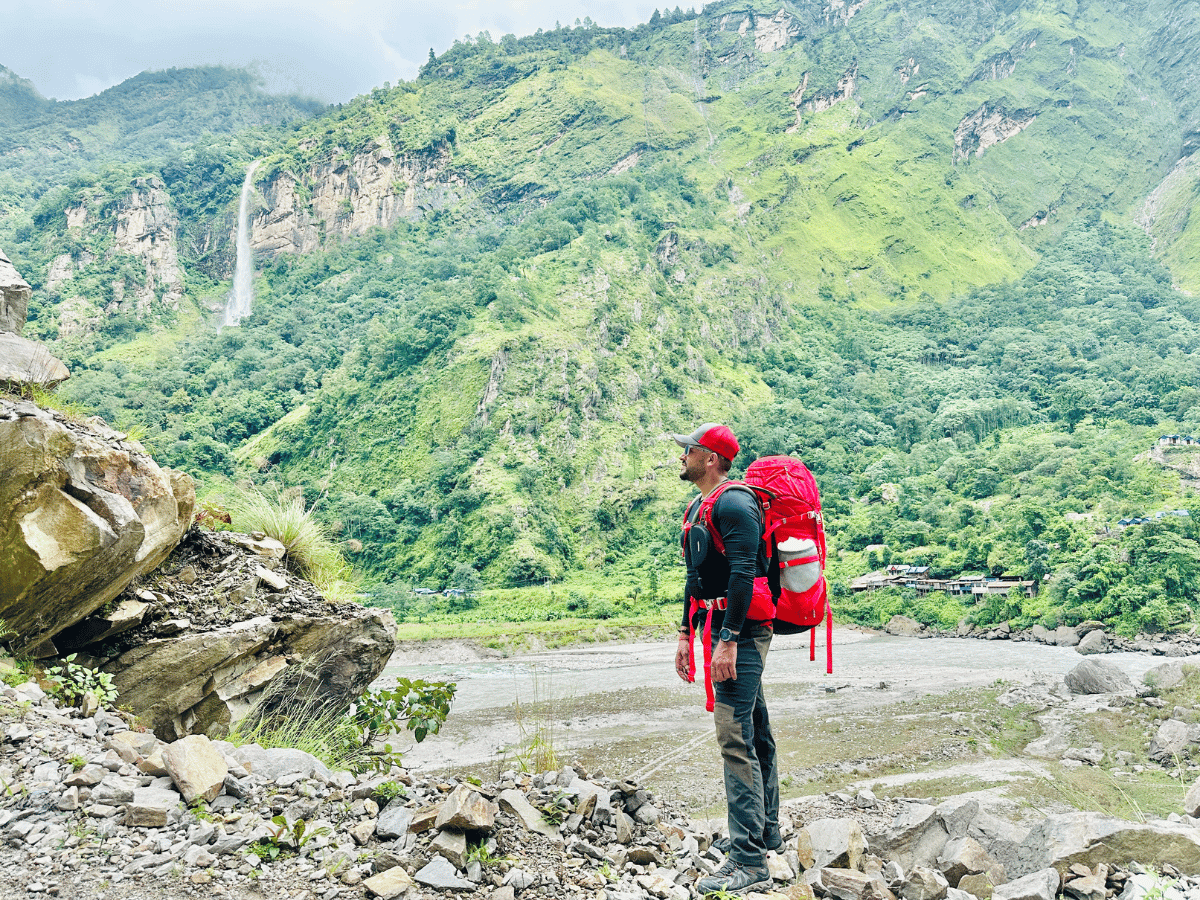
At the beginning, the trail passes through warmer valleys, farmland, forests and river gorges. As you move deeper into Manaslu, the valley becomes narrower and the villages increasingly reflect Tibetan Buddhist culture.

Then comes the high mountain section.

You cross Larkya La and descend toward Bimthang and Dharapani. Instead of ending the trek there, this itinerary continues into the Annapurna region.

The scenery changes once again.

The Marsyangdi Valley leads toward Chame, Pisang and Manang before the trail climbs toward Thorong La. After crossing the pass, the landscape opens toward Muktinath and the dry Himalayan valleys of Mustang.

In one journey, you therefore encounter:

  • River valleys
  • Terraced farmland
  • Subtropical forests
  • Pine and rhododendron forests
  • Tibetan-influenced villages
  • Buddhist monasteries
  • Glacial landscapes
  • High-altitude valleys
  • Two major Himalayan passes
  • Sacred Muktinath
  • The Kali Gandaki region

That geographical progression is one of the defining features of the Manaslu and Annapurna Circuit Trek.

Manaslu Circuit and Annapurna Circuit Trek Highlights

Major Mountain Experiences

  • Trek around the spectacular Manaslu massif
  • See Mount Manaslu (8,163m) and surrounding Himalayan peaks
  • Cross Larkya La Pass
  • Cross the famous Thorong La Pass
  • Explore the high-altitude Manang region
  • Visit Muktinath after the Thorong La crossing
  • Experience the transition from the Manaslu landscape into Annapurna

Cultural Experiences

  • Walk through traditional Himalayan villages
  • Experience Gurung and Tibetan-influenced mountain culture
  • See Buddhist prayer flags, mani walls and monasteries
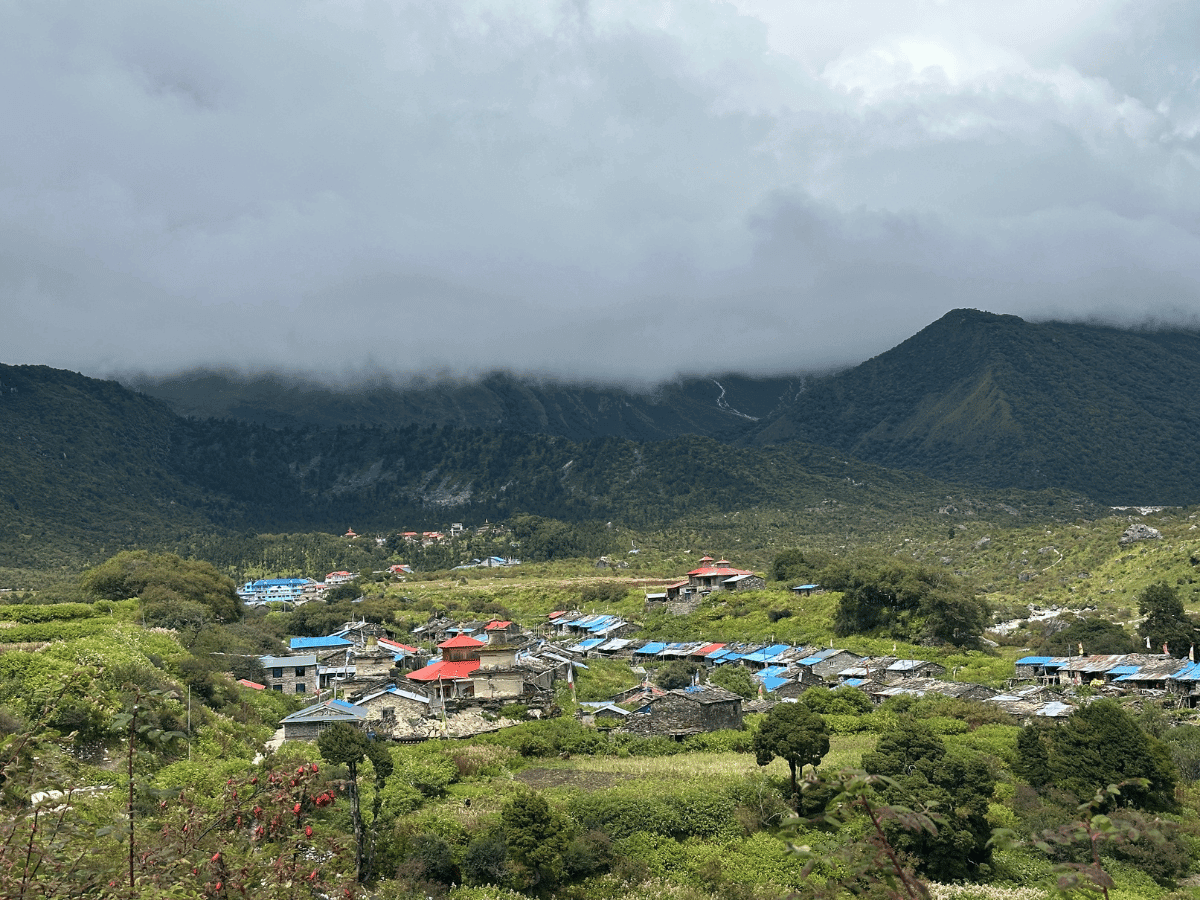
  • Visit traditional settlements in the upper Manaslu valley
  • Experience the distinctive culture of Manang and Mustang
  • Visit the important pilgrimage area of Muktinath

Nature and Landscape

  • Budhi Gandaki River valley
  • Dense mountain forests
  • Waterfalls and suspension bridges
  • Alpine meadows
  • Glacial mountain scenery
  • High Himalayan passes
  • Marsyangdi Valley
  • Dry Himalayan landscapes around Muktinath

The Journey in Three Acts

One useful way to understand this trek is to divide it into three different Himalayan experiences.

Act One: Entering the Manaslu Wilderness

The first section follows the Budhi Gandaki Valley.

The landscape changes gradually rather than suddenly. Green hills and cultivated land give way to steep valley walls, forests and increasingly dramatic mountain scenery.

As you approach the upper Manaslu region, Tibetan Buddhist influences become increasingly visible.

Act Two: Larkya La and the High Manaslu

The trail eventually reaches Sama Gaon, Samdo and the high settlement area below Larkya La.

This is where altitude becomes a major consideration.

The Larkya La crossing is one of the key challenges of the entire journey. Weather, snow and trail conditions can affect the difficulty of the crossing.

After the pass, the trail descends toward Bimthang and eventually Dharapani.

Act Three: From Dharapani into Annapurna

Dharapani is the important transition point.

Instead of ending the Manaslu journey there, this itinerary continues along the Marsyangdi Valley toward Chame, Pisang and Manang.

After acclimatization around Manang, the trail climbs toward Thorong Phedi and eventually crosses Thorong La.

The descent to Muktinath marks another dramatic change in landscape.

Outline Itinerary – 20 Days

This is the outline version for the website package page. A detailed day-by-day itinerary can be developed separately.

  • Day 1 – Drive from Kathmandu to the Manaslu Trek Starting Place Machhekhola
  • Day 2 – Trek from Machhe Khola to Jagat
  • Day 3 – Jagat to Deng
  • Day 4 – Deng to Namrung
  • Day 5 – Namrung to Lho
  • Day 6 – Lho to Sama Gaon
  • Day 7 – Acclimatization in Sama Gaon
  • Day 8 – Sama Gaon to Samdo
  • Day 9 – Samdo to Dharamshala / Larkya Phedi
  • Day 10 – Cross Larkya La Pass and Descend to Bimthang
  • Day 11 – Bimthang to Dharapani
  • Day 12 – Dharapani to Chame by Drive
  • Day 13 – Chame to Pisang
  • Day 14 – Pisang to Manang
  • Day 15 – Acclimatization in Manang
  • Day 16 – Manang to Yak Kharka
  • Day 17 – Yak Kharka to Thorong Phedi
  • Day 18 – Cross Thorong La and Descend to Muktinath
  • Day 19 – Muktinath to Pokhara
  • Day 20 – Pokhara to Kathmandu

Important: The exact transport sections and overnight locations can be adjusted because road construction, weather, landslides and local trail conditions can affect the route.

Detailed Route Flow

For travellers who want to understand the trek before booking, the route can be viewed like this:

Kathmandu → Manaslu region → Budhi Gandaki Valley → Jagat → Deng → Namrung → Lho → Sama Gaon → Samdo → Dharamshala → Larkya La → Bimthang → Dharapani → Chame → Pisang → Manang → Thorong Phedi → Thorong La → Muktinath → Pokhara → Kathmandu

This route makes the Manaslu section the foundation of the trip and then naturally continues into the Annapurna Circuit.

Where Does the Manaslu Trek Meet the Annapurna Circuit?

The important connection is Dharapani.

After crossing Larkya La and descending through Bimthang, the Manaslu route reaches Dharapani. From here, the journey continues along the Annapurna Circuit toward Chame and Manang.

This geographical connection is the reason the two circuits can be combined into one continuous trek without returning to Kathmandu between them. Current route references also identify Dharapani as the natural junction between the two trekking areas.

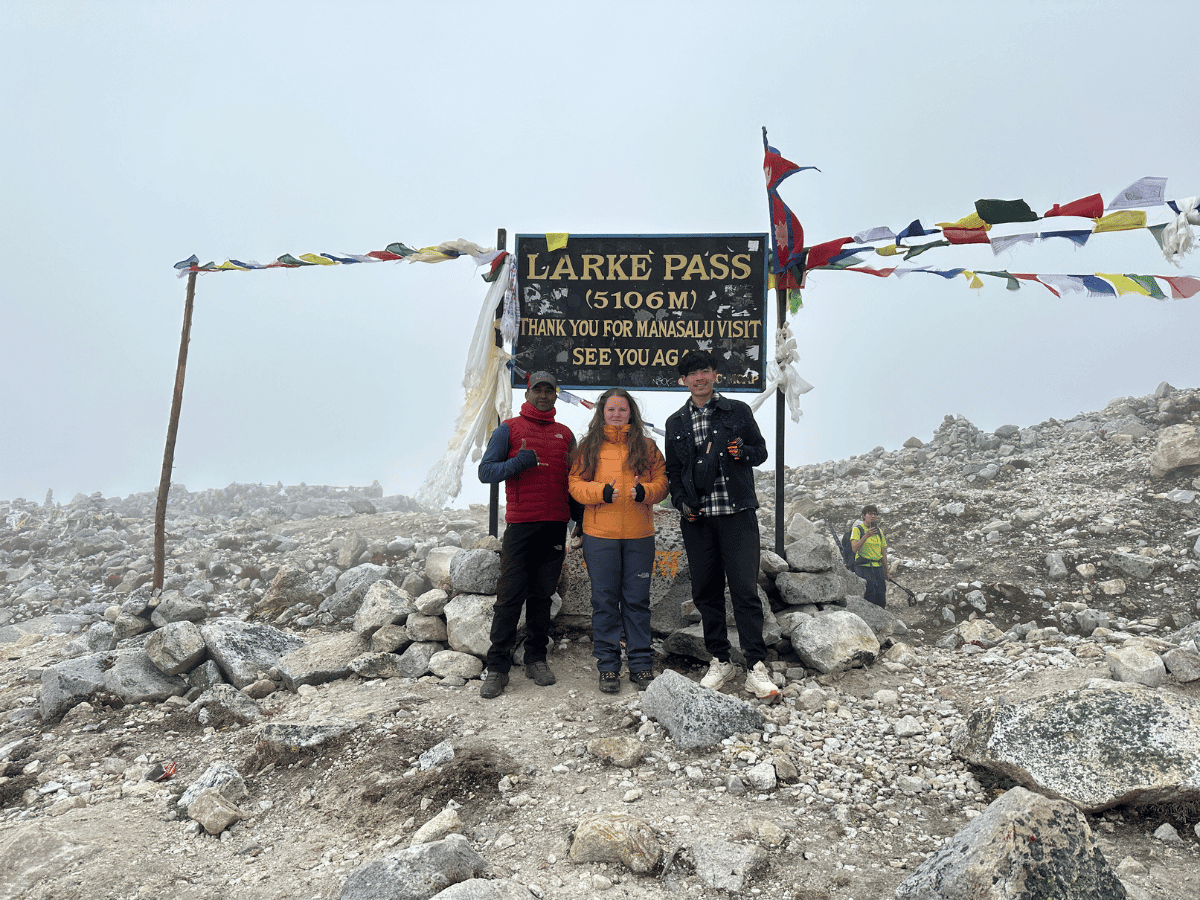
Larkya La Pass – The Manaslu High Point

Larkya La is the major mountain pass on the Manaslu Circuit.

The pass is generally described as being around 5,100 metres above sea level, although published route information gives slightly different figures depending on mapping and measurement conventions.

The crossing involves:

  • Early morning departure
  • Gradual ascent
  • Cold and potentially windy conditions
  • High-altitude terrain
  • Possible snow and ice depending on season
  • Long descent after reaching the pass

The pass day can be physically demanding because trekkers gain considerable altitude and then descend for several hours.

Weather conditions should always be assessed locally before attempting the crossing.

Thorong La Pass – The Highest Point of the Journey

Thorong La is the highest point of this combined itinerary at approximately 5,416 metres.

The crossing begins from the high-altitude area around Thorong Phedi.

The usual pattern is:

Thorong Phedi → Thorong La → long descent → Muktinath

The pass is high enough that altitude, cold, wind and weather can significantly affect the experience.

A slow pace and proper acclimatization are important.

How Difficult Is the Manaslu Annapurna Circuit Trek?

This is a challenging high-altitude trek.

The difficulty comes from the combination of several factors rather than one particular trail.

The main challenges include:

  • Two high passes above 5,000m
  • Long trekking days
  • Significant elevation gain and loss
  • Remote sections of the Manaslu region
  • Basic accommodation at some high-altitude locations
  • Cold conditions at higher elevations
  • Potential snow around the passes
  • Changing mountain weather
  • Long descents after both major passes

Who is this trek suitable for?

The trek is better suited to travellers who are:

  • Physically active
  • Comfortable walking for several hours a day
  • Prepared for high altitude
  • Comfortable with simple mountain accommodation
  • Patient with changing weather and road conditions
  • Willing to walk at a controlled pace

Previous trekking experience is helpful, particularly experience at altitude, but suitability ultimately depends on individual fitness, preparation, acclimatization and medical circumstances.

Altitude and Acclimatization

Altitude is one of the most important subjects on this trek.

The route does not simply go uphill every day. It includes periods of ascent, descent and acclimatization.

Important acclimatization points include:

Sama Gaon

This is a key acclimatization location before moving toward Samdo and Larkya Phedi.

A short hike can help with gradual acclimatization.

Manang

Manang provides another important acclimatization opportunity before the route climbs toward Thorong La.

High-altitude warning signs

Trekkers should immediately tell their guide if they experience symptoms such as:

  • Headache
  • Nausea
  • Dizziness
  • Unusual tiredness
  • Loss of appetite
  • Difficulty sleeping
  • Shortness of breath

More serious symptoms require immediate action, including descent and medical assistance where appropriate.

A trekking itinerary should never be treated as more important than a person’s health.

Manaslu Trek Permits and Regulations

The Manaslu section includes a restricted area, so foreign trekkers must comply with Nepal’s restricted-area trekking regulations.

The Department of Immigration states that trekking permits for designated restricted areas are issued through registered trekking agencies.

The current Department of Immigration fee page lists the Gorkha Manaslu restricted-area permit as:

  • September–November: USD 100 per person per week
  • December–August: USD 75 per person per week
  • Additional charges apply after the first week according to the applicable seasonal rate.

Other applicable conservation-area permits are separate from the restricted-area permit.

Because Nepal can revise trekking regulations and fees, Manaslu Hike should verify the applicable permit requirements and rates for the traveller’s exact departure date before issuing the final quotation.

Start Finish Availability Price
September 28, 2026 Trip Status guaranteed Starting from $0 Book Now

Complimentary

  • Trekking Pole/ Stick
  • Company T-Shirt & Cap
  • One Portable Oxygen Cylinder (for emergencies)
  • Nepali SIM Card, but the Data You Have to pay for
  • 1-hour full-body Trekker’s massage after returning from the trek

Essential Information of Manaslu Circuit and Annapurna Circuit Trek

Accommodation on the Trek

This is a teahouse-style Himalayan trek rather than a luxury hotel journey throughout.

Most nights are spent in local mountain lodges.

Typical accommodation features:

  • Twin-sharing rooms
  • Beds and mattresses
  • Common dining areas
  • Shared bathroom facilities in many locations
  • Hot showers in some villages for an additional charge
  • Electricity where available
  • Charging facilities where available
  • Wi-Fi in selected locations

Facilities become more basic as the trail reaches higher and more remote settlements.

Travellers should therefore prepare for comfort to decrease as altitude and remoteness increase.

Food During the Manaslu and Annapurna Trek

Food is an important part of life on the Himalayan trail.

Teahouses commonly serve a mixture of Nepali, Tibetan and international-style trekking meals.

Common trekking meals include:

  • Dal Bhat
  • Rice
  • Vegetable curry
  • Noodles
  • Pasta
  • Soup
  • Potatoes
  • Eggs
  • Tibetan bread
  • Pancakes
  • Momo
  • Toast
  • Porridge
  • Tea
  • Coffee

Dal Bhat is particularly popular because it is filling and provides a practical source of carbohydrates and protein during long trekking days.

At higher elevations, food choices may be more limited.

Landscape and Climate Changes Along the Route

One of the most interesting features of the trek is how dramatically the environment changes.

Lower Manaslu

You can expect:

  • Green hills
  • Terraced fields
  • Rivers
  • Waterfalls
  • Forests
  • Warm temperatures compared with the upper valley

Upper Manaslu

The environment becomes:

  • Colder
  • Drier
  • More alpine
  • More exposed
  • Increasingly dominated by high mountain scenery

Manang

The landscape becomes noticeably drier and more open, with large Himalayan peaks surrounding the valley.

Thorong La

The environment is high, cold and exposed.

Muktinath and the Kali Gandaki region

After crossing Thorong La, the scenery changes again toward the dry mountain landscapes associated with the Mustang side of the Himalayas.

This sequence of ecological and cultural changes is one of the strongest reasons to combine the two circuits.

Best Time for the Manaslu Annapurna Circuit Trek

The best time depends on what conditions you are prepared to experience.

Spring – March to May

Spring is a major trekking season.

Possible advantages include:

  • Warmer temperatures than winter
  • Rhododendron flowering at lower elevations
  • Increasingly stable mountain conditions
  • Good opportunities for mountain views

Autumn – September to November

Autumn is another major trekking season.

Possible advantages include:

  • Post-monsoon conditions
  • Generally clearer mountain views
  • Comfortable daytime trekking temperatures
  • Good conditions for high-pass trekking

Winter – December to February

Winter can bring:

  • Very cold nights
  • Snow at high elevations
  • Challenging pass conditions
  • Possible temporary route difficulties

The suitability of a winter departure depends strongly on current weather and snow conditions.

Monsoon – June to August

The lower sections can receive substantial rainfall.

Possible issues include:

  • Wet trails
  • Landslides
  • Cloud
  • Road delays
  • Changing trail conditions

Conditions vary by elevation, and exact travel decisions should be based on current local information.

What Should You Pack?

The packing list should balance warmth, weight and practicality.

Clothing

  • Moisture-wicking base layers
  • Trekking shirts
  • Fleece layer
  • Warm down jacket
  • Waterproof jacket
  • Trekking trousers
  • Thermal underwear
  • Warm socks
  • Gloves
  • Warm hat
  • Sun hat

Footwear

  • Good-quality trekking boots
  • Comfortable camp shoes
  • Extra trekking socks

Trekking Equipment

  • Backpack
  • Duffel bag
  • Sleeping bag suitable for cold conditions
  • Trekking poles
  • Headlamp
  • Water bottles
  • Water purification method
  • Sunglasses
  • Sunscreen
  • Personal toiletries
  • Small first-aid kit

Personal Documents

  • Passport
  • Nepal visa
  • Travel insurance documents
  • Emergency contact information
  • Copies of important documents

Your guide or trekking agency should provide a final equipment checklist according to the season and current route conditions.

Travel Insurance for the Trek

Travel insurance is strongly recommended for this journey.

Because the route reaches above 5,000m, travellers should carefully check that their policy covers the altitude and activities involved.

Your policy should ideally cover:

  • High-altitude trekking
  • Emergency medical treatment
  • Emergency evacuation
  • Helicopter evacuation where medically necessary
  • Trip cancellation
  • Trip interruption
  • Baggage problems

Do not assume that every standard travel insurance policy automatically covers high-altitude trekking.

Responsible Trekking in the Manaslu Region

The Manaslu region is not simply a trekking route. It is a living Himalayan landscape where communities, religion, agriculture and tourism exist together.

Travellers can help protect the region through simple decisions.

Follow these principles:

  • Carry reusable water bottles
  • Reduce plastic waste
  • Never leave rubbish on the trail
  • Respect monasteries and religious places
  • Ask before photographing local people
  • Follow local customs
  • Use established trails
  • Avoid unnecessary damage to vegetation
  • Support local teahouses and businesses
  • Keep noise low in villages
  • Take all personal waste with you when appropriate

Responsible travel is especially important in remote mountain communities.

Why Book the Manaslu Annapurna Circuit Trek With Manaslu Hike?

Manaslu Hike is focused on trekking in the Manaslu region of Nepal.

Rather than treating Manaslu as a small part of a general Nepal trekking catalogue, our approach is to help travellers understand the route properly before they start walking.

Our trekking service can assist with:

  • Manaslu trekking permits
  • Trek planning
  • Route arrangements
  • Transportation
  • Licensed guides
  • Porters
  • Teahouse accommodation
  • Acclimatization planning
  • Trek preparation
  • High-altitude safety awareness
  • Emergency coordination
  • Customized trekking arrangements

We can arrange the itinerary for private travellers, couples, families with suitable trekking experience, friends and small groups.

Private or Group Manaslu Annapurna Trek

Private Trek

A private trek allows greater flexibility with:

  • Walking pace
  • Rest stops
  • Photography
  • Side trips
  • Accommodation preferences
  • Departure date

Group Trek

A group departure can be suitable for travellers who want to share the experience with other trekkers.

Group arrangements can vary by departure date and availability.

Can the Trek Be Customized?

Yes.

The 20-day itinerary is a framework rather than a rule that every traveller must follow.

Depending on the traveller’s schedule and physical preparation, the itinerary can be discussed around:

  • Additional acclimatization
  • Different transportation arrangements
  • Additional nights in Kathmandu
  • Additional nights in Pokhara
  • Private transportation
  • Different exit arrangements
  • Side hikes where practical
  • Group size
  • Accommodation preferences

However, shortening a high-altitude trek should never be done simply to save time if it removes necessary acclimatization.

Manaslu Circuit and Annapurna Circuit Trek Cost

There is no single fixed price that applies to every traveller.

The final cost depends on:

  • Group size
  • Travel season
  • Number of trekking days
  • Transportation
  • Accommodation category
  • Guide arrangement
  • Porter requirement
  • Permit fees
  • Kathmandu accommodation
  • Pokhara accommodation
  • Private or group service
  • Domestic flight requirements
  • Personal preferences

For a precise quotation, travellers should provide their:

  1. Preferred travel date
  2. Number of trekkers
  3. Nationality
  4. Preferred accommodation level
  5. Private or group preference
  6. Any additional services required

Manaslu Hike can then prepare a detailed quotation rather than providing a misleading one-size-fits-all price.

Who Should Consider This Trek?

This journey may suit travellers who want more than a short Himalayan holiday.

It can be particularly interesting for people who:

  • Want to explore the Manaslu region in depth
  • Enjoy long-distance trekking
  • Want to cross two major Himalayan passes
  • Prefer a combination of remote and established trekking areas
  • Are interested in Himalayan cultures
  • Want to experience different landscapes in one journey
  • Have enough time for a longer Nepal trek
  • Are prepared for basic mountain accommodation
  • Understand that high-altitude trekking requires flexibility

Who Should Prepare Carefully Before Booking?

Extra preparation is important for travellers who:

  • Have little or no trekking experience
  • Have never been above 3,000m
  • Are uncomfortable with long walking days
  • Require highly developed accommodation
  • Are travelling with insufficient time for acclimatization
  • Expect predictable weather
  • Are not prepared for basic facilities

Travellers with medical conditions should discuss their planned high-altitude trek with an appropriate medical professional before departure.

FAQ's of Manaslu Circuit and Annapurna Circuit Trek

It can be organized as one continuous trekking journey. The Manaslu Circuit section reaches Dharapani, where the route connects naturally with the Annapurna Circuit.

This package is planned as a 20-day itinerary, including arrival, trekking, transportation and the return journey. The exact number of trekking days can vary according to the final route and transportation arrangements.

The highest point is Thorong La Pass at approximately 5,416m.

The Manaslu section crosses Larkya La at roughly 5,100m.

Yes. The combined route is a challenging high-altitude trek because it includes two major passes above 5,000m, long walking days and remote mountain sections.

Foreign trekkers entering Nepal’s designated restricted areas must follow the government’s permit and trekking regulations. The Department of Immigration states that restricted-area permits are issued through registered trekking agencies.

The practical connection is around Dharapani, after the descent from the Larkya La side.

It depends on your physical condition and preparation. Because this itinerary includes two high passes, previous multi-day trekking and altitude experience is useful.

The trek provides opportunities to see Mount Manaslu and many surrounding Himalayan peaks. Visibility depends on weather, season and location.

Larkya La is the major high mountain pass on the Manaslu Circuit, at approximately 5,100m.

Thorong La is the famous high pass on the Annapurna Circuit, at approximately 5,416m.

There can be snow, particularly during colder periods, but conditions vary considerably from season to season. The trekking team should check current local conditions before the crossing.

Wi-Fi may be available in some villages, but connectivity should not be expected everywhere, particularly in remote and high-altitude sections.

Hot showers are available in some teahouses, usually for an additional charge. Availability becomes more limited at higher elevations.

Charging facilities are available in many teahouses, but availability and electricity reliability vary. Carrying a power bank is recommended.

Travel insurance is strongly recommended, particularly insurance that covers high-altitude trekking and emergency evacuation.

The itinerary may need to change. High-altitude passes should only be crossed when conditions are considered suitable by the trekking team. Safety takes priority over maintaining the planned schedule.

Client reviews

Review Requests

Enter a recent customer’s contact info and we’ll ask them to leave you a review.

Related treks

×

Type above and press Enter to search. Press Close to cancel.