

Tsum Valley Trek – 18 Days
Trip Facts
Most Interesting aspect
- Off-the-beaten and less crowded trekking trail in Manaslu.
- Discover the hidden and remote Himalayan lifestyle.
- Encounter with several wildlife in Manaslu Conservation Area.
- Experience the Tibetan Lifestyle and Tibetan Buddhism.
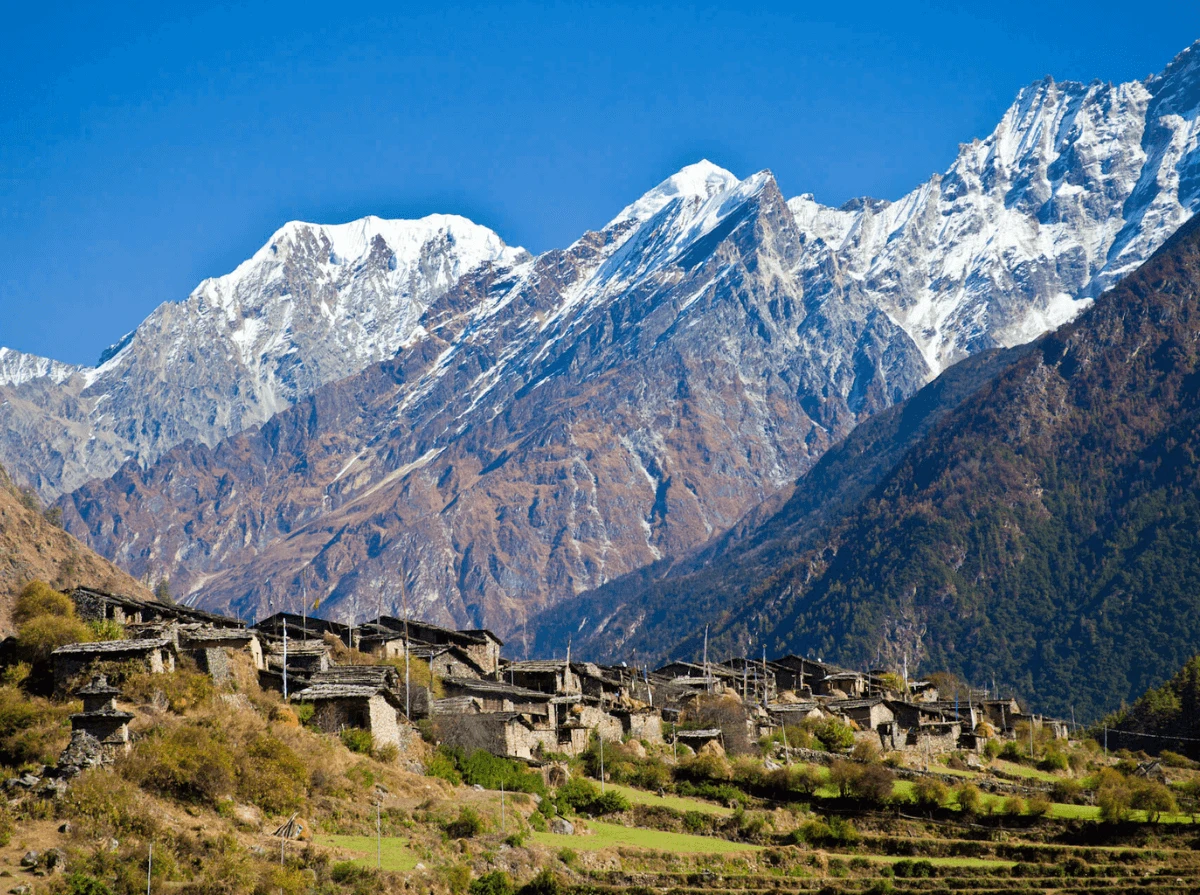
- Heavenly views of soaring peaks like Mt. Manaslu, Ganesh Himal, HImalchuli, etc.
Overview
Brief of Tsum Valley Trek
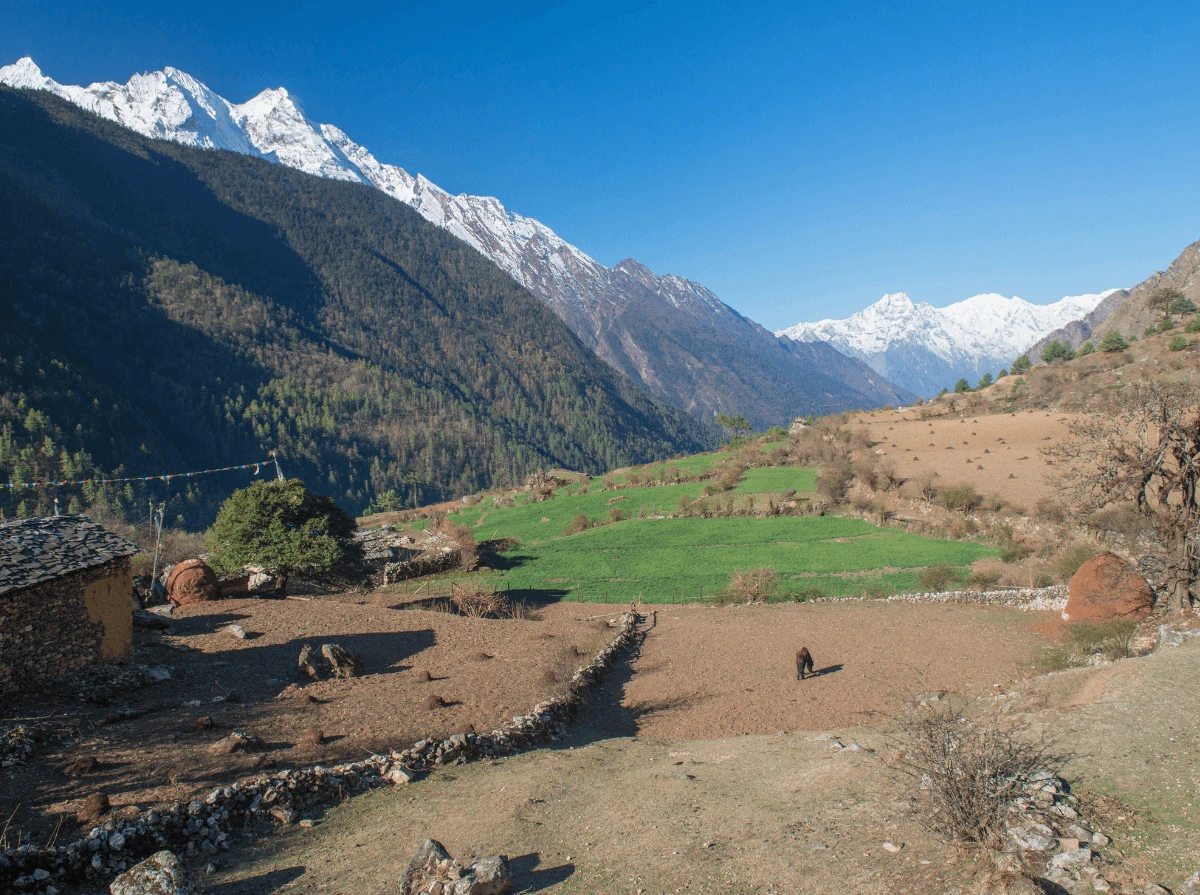
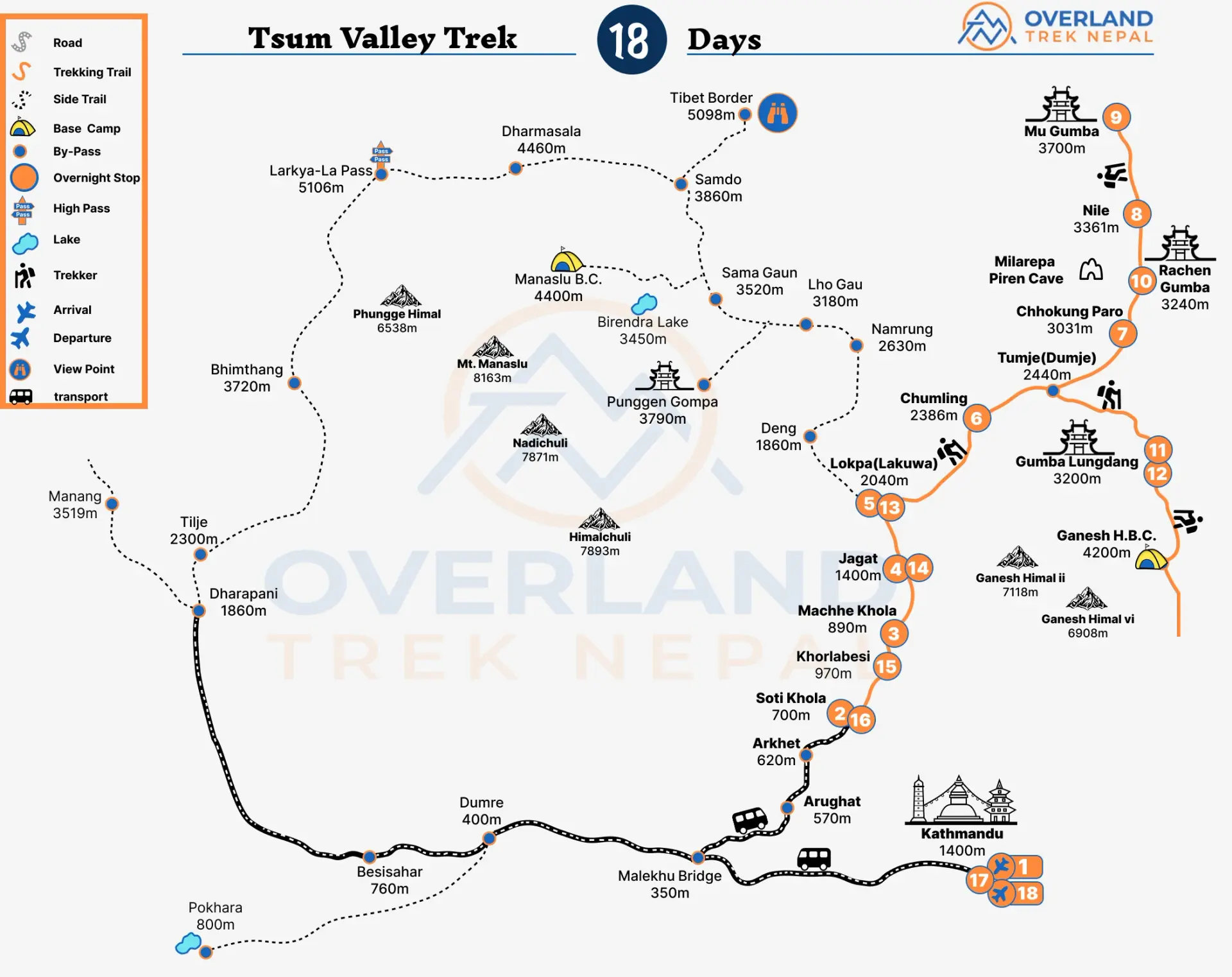
Tsum Valley Trek is an off-the-beaten trekking path in the Manaslu Region. This unique journey in the restricted area of Nepal takes you close to the Tibetan Border. The Valley is rich in cultural heritages, rugged landscapes, raw natural beauty, and soaring mountain vistas. Nestled in the hidden core of Nepal, Tsum Valley is an ideal destination for those looking for a less crowded and adventurous journey. Nestled at the base of Ganesh Himal, Himalchuli, and Mt. Manalsu, this journey is one of the most demanding treks in Nepal. Although the voyage to Tsum Valley is up to 3700 meters, previous trekking experience would help navigate the rugged trails of the Manaslu Region.
The Tsum Valley Trekking route was opened for foreigners after 2008, and until now, a special permit card is required to enter this region. Following the 18-day Itinerary, you will travel to Nepal’s most remote and isolated area. Being extremely close to the Tibetan Border, the valley is highly influenced by Tibetan lifestyle. This is one of the reasons to obtain a restricted permit card to preserve the Tibetan Buddhism of this area.
Overland Trek Nepal offers a customized 18-day Tsum Valley Trekking Package that covers your arrival and departure in Nepal. We are always keen to deliver top services and ensure our clients get unforgettable experiences in the remote Himalayas. Moreover, if you want to join Manaslu Circuit Trekking with Tsum Valley, please contact us.
What to Expect during the Tsum Valley Trek?
The Tsum Valley Expedition is an excellent opportunity to discover an isolated area of Nepal close to the Tibetan Border. Hiking through the lush green forests, rugged terrain, remote villages, landscapes, and gorges will lead you to the Tsum.
- Stroll around the scenic and remote villages of Tsum.
- Spiritual Tibetan Buddhism and Monasteries along the Journey.
- Blissful mountain peaks and landscapes.
- Diverse Flora and Fauna inside Manaslu Conservation Area.
- Thrilling Budi Gandaki Gorge and waterfalls en route.
Itinerary
You’ll also receive your permits, including the Manaslu Conservation Area Permit (MCAP) and the Tsum Valley Restricted Area Permit, both required to access this remote region. By late afternoon, you can stroll around the bustling streets of Thamel, Kathmandu’s lively tourist hub, and explore local markets offering trekking gear, handicrafts, and traditional Nepali goods. Enjoy a welcome dinner in the evening at a restaurant serving authentic Nepali cuisine, where you can taste dal bhat (a traditional meal of rice, lentils, and vegetables) and other local delicacies.
This day offers the perfect mix of preparation and cultural immersion, setting the stage for your Tsum Valley Trek adventure.
The 160 km journey gives you your first taste of the natural beauty and rural life of Nepal. As you leave the hustle and bustle of Kathmandu behind, the drive offers spectacular views of green hills and traditional villages where local farmers are seen cultivating rice, maize, and millet. Lunch will be at a small roadside restaurant, where you can enjoy dal bhat (Nepali rice and lentil soup) or a plate of freshly made momos (Nepalese dumplings).
After about 6-7 hours of driving, you will arrive at Soti Khola, the starting point of your trek into the Tsum Valley. Soti Khola is a small village located on the banks of the Budhi Gandaki River. The surrounding hills are dotted with lush greenery, and you’ll begin to see the mountainous landscapes that will accompany you throughout the Tsum Valley Trek. You’ll have time to explore the village and relax at the tea house before dinner. The local people here are mainly from the Gurung community, known for their warm hospitality. Dinner will typically consist of traditional Nepali food like dal bhat, curries, or noodle soups.
The remoteness of this village also gives you a glimpse into the life of people in rural Nepal, where agriculture plays a vital role. The terraced fields around the village are used for growing crops like rice and barley. After a hearty meal, you’ll rest for the night, preparing for the trek ahead.
After around 3-4 hours of trekking, you’ll stop for lunch at a village en route. Lunch typically consists of dal bhat, vegetable curries, and sometimes fried noodles or Tibetan bread. The trail is scenic, winding past waterfalls and steep cliffs, with towering hills surrounding you on all sides. This section of the Tsum Valley Trek is rich in biodiversity, offering sightings of langur monkeys swinging through the trees and a wide variety of birds.
By mid-afternoon, you’ll arrive at Machha Khola, a small Gurung village that sits beside the river. This is an excellent place to relax after the day’s trek. You can explore the village, interact with locals, and learn more about their traditional way of life. The villagers here mostly practice subsistence farming, growing crops like millet, maize, and wheat on terraced slopes. Many homes also have kitchen gardens filled with seasonal vegetables.
The region’s diverse agricultural practices are adapted to the steep terrain, and the simple yet resilient lifestyle of the people here is reflected in their warm hospitality. Dinner will be served at your tea house, typically featuring local staples like dal bhat, noodles, or momos (Nepalese dumplings). After dinner, you can chat with fellow trekkers or simply relax, enjoying the serene sounds of the river before heading to bed.
About midway through the trek, you’ll stop for lunch at a small teahouse. The lunch menu typically offers dishes like dal bhat, noodle soups, or fried rice with fresh vegetables. The surroundings begin to change as you enter more isolated areas, with fewer villages and more natural beauty. The trail often skirts around huge rock faces and waterfalls, offering breathtaking views of the valley.
By early afternoon, you’ll arrive at Jagat, a charming village that serves as the official entry point into the Manaslu Conservation Area. The village is known for its traditional stone houses and welcoming locals, who mainly belong to the Gurung and Tamang ethnic groups. As you explore Jagat, you’ll notice influences of both Hinduism and Buddhism, with prayer flags fluttering and small stupas dotting the landscape. Agriculture remains a key livelihood here, with terraced fields growing rice, wheat, and barley, depending on the season.
The architecture in Jagat reflects the mountainous environment, with stone walls built to withstand the region’s rugged climate. Dinner at your tea house will include options such as dal bhat, noodle dishes, or Tibetan-style bread. You’ll spend the evening relaxing and preparing for the next day’s trek, enjoying the tranquil surroundings of this highland village.
The route continues through several villages, and you’ll stop for lunch at a teahouse nestled in the hills. Meals here are hearty, with options like fried noodles, dal bhat, and locally grown vegetables. The day’s trek is moderately challenging, with steep climbs and narrow paths that snake along ridges. Along the way, you’ll cross suspension bridges and catch glimpses of cascading waterfalls. As you move higher in altitude, the vegetation becomes sparser, and the Tibetan Buddhist influence becomes more prominent.
After trekking for about 6-7 hours, you’ll reach Lokpa, a peaceful village perched at 2,040 meters. Lokpa marks the gateway to the remote Tsum Valley, and the culture here is distinctly Tibetan. The villagers here follow ancient Buddhist practices, and you’ll notice prayer wheels, mani walls, and intricately carved stupas scattered around the village. Lokpa offers the first real taste of the Tsum Valley Trek’s isolation, with stunning views of surrounding peaks and deep gorges.
Dinner will be served in your tea house, where you can enjoy a traditional Nepali meal, followed by a relaxing evening. The local agriculture in Lokpa is limited due to the higher altitude, but you’ll see terraced fields used for growing hardy crops like barley and buckwheat. This is a remote area, where people live simple, subsistence-based lives, largely untouched by the outside world.
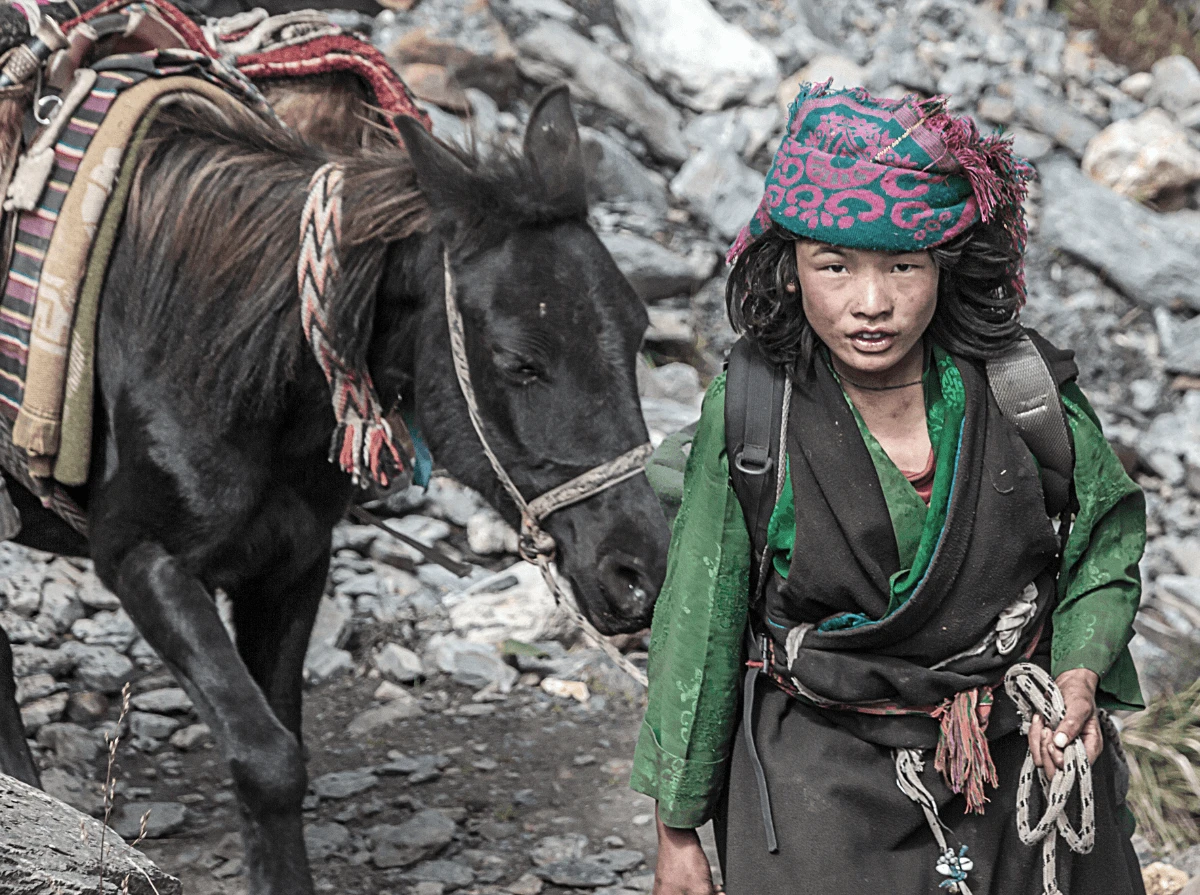
The trail from Lokpa to Chumling is a moderately challenging route with several ups and downs. You’ll begin by descending into a lush, forested gorge, crossing small rivers and walking alongside stunning waterfalls. Along the way, you may encounter locals transporting goods by mule or carrying supplies in traditional baskets slung over their backs. The local lifestyle here is still largely based on subsistence farming, and you’ll see terraced fields where the villagers grow barley, wheat, and potatoes.
After about 3 hours of trekking, you’ll stop for lunch at a small teahouse, where the menu might include dal bhat, thukpa (Tibetan noodle soup), or fried noodles with vegetables. The food is simple but hearty, providing much-needed fuel for the rest of the trek. The afternoon portion of the trek involves a gradual ascent toward Chumling, a picturesque village nestled at the base of towering cliffs. As you approach Chumling, you’ll pass through dense rhododendron and pine forests, where the chirping of birds and the rustling of leaves create a serene atmosphere.
Arriving at Chumling by mid-afternoon, you’ll have time to explore the village. Chumling is an important part of the Tsum Valley Trek, offering a glimpse into the ancient Tibetan Buddhist culture that thrives in this region. The village is home to several small monasteries and mani walls, and the houses here are built in traditional Tibetan style, with stone walls and flat roofs. You’ll also have sweeping views of the Ganesh Himal Range from Chumling, a visual reminder of the remote and rugged terrain of the Tsum Valley.
Dinner is served at your tea house, where you’ll enjoy a warm meal of dal bhat or a Tibetan-style dish like tsampa (barley flour porridge). You’ll spend the evening relaxing in the peaceful surroundings, reflecting on the day’s trek as you prepare for tomorrow’s journey deeper into the valley.
The first part of the trek follows a steep trail that gradually ascends, offering panoramic views of the surrounding valleys and the distant Ganesh Himal Range. You’ll cross several suspension bridges that span across roaring rivers, with the path often flanked by prayer flags fluttering in the wind. After about 3 hours of trekking, you’ll arrive at a small teahouse where you’ll stop for lunch. Meals typically include dal bhat, fried noodles, or roti with curry, providing ample energy for the climb ahead.
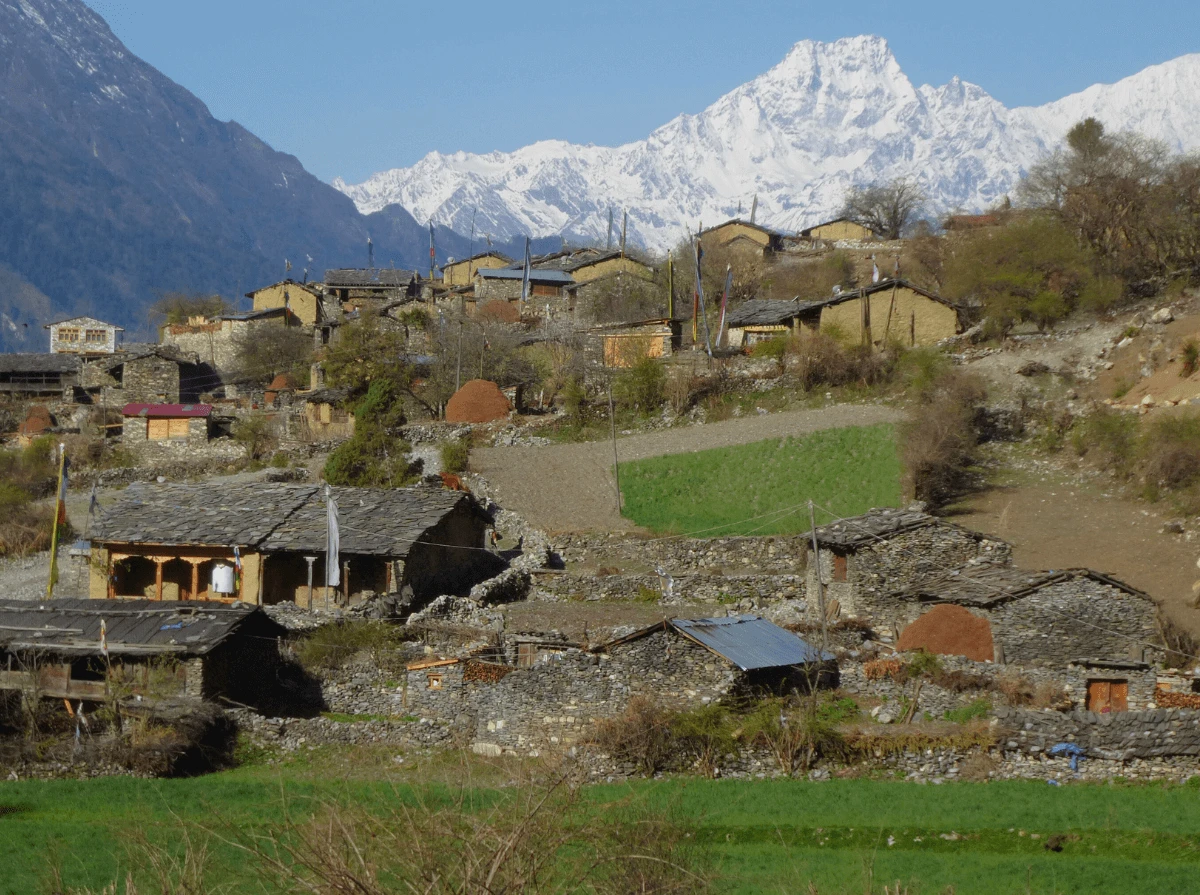
As you continue toward Chhokang Paro, the landscape changes dramatically, with the valley opening up into wide, expansive fields surrounded by rocky cliffs and snow-capped peaks. This area is deeply influenced by Tibetan Buddhism, and you’ll encounter mani walls, chortens, and prayerwheels along the trail. The local people, known as Tsumbas, are ethnically Tibetan and maintain many of their ancient customs and traditions. You’ll likely see villagers in traditional Tibetan dress, working in the fields or herding yaks and sheep.
By mid-afternoon, you’ll arrive at Chhokang Paro, a picturesque village situated at 3,031 meters. This village is the cultural heart of the Tsum Valley and offers stunning views of Shingri Himal and Ganesh Himal. You’ll have time to explore the village, visiting the local monastery or simply interacting with the friendly villagers, who live in stone houses and practice a peaceful, agricultural way of life. The people here grow barley, buckwheat, and potatoes in terraced fields, and their homes are adorned with Buddhist symbols and prayer flags.
Dinner will be served at your tea house, with a choice of dal bhat, thukpa, or Tibetan bread. The quiet evening in Chhokang Paro allows you to reflect on the incredible journey through the valley, as the stars twinkle brightly in the clear mountain sky.
The path follows a gentle ascent, with several small Tibetan settlements dotting the route. You’ll walk alongside terraced fields, where the locals grow barley, wheat, and potatoes. The people of the Tsum Valley continue to practice a traditional lifestyle, relying on farming and animal husbandry to sustain themselves. You’ll pass several ancient chortens (Buddhist shrines) and mani walls covered in intricately carved stones, reflecting the deep spiritual significance of this remote region.
After about 3 hours, you’ll stop for lunch at a small teahouse in a village along the way. Lunch typically consists of dal bhat, noodle soups, or Tibetanbread with vegetable curry. The afternoon trek is relatively easy, with a gradual ascent toward Nile,located at 3,361 meters. As you approach Nile, you’ll notice the landscape becoming more barren, with fewer trees and more rocky outcrops. The village itself is perched on a hillside, offering spectacular views of the surrounding mountains.
Upon reaching Nile by mid-afternoon, you’ll have time to explore the village and its surroundings. Nile is a traditional Tibetan village, with stone houses and Buddhist symbols visible throughout. The people here lead a simple, agrarian lifestyle, relying on crops like barley and potatoes, as well as yak and sheep farming. The village is also home to an ancient monastery, where you can witness the daily rituals of the local monks.
Dinner will be served at your tea house, and you’ll enjoy a warm meal while taking in the quiet, peaceful atmosphere of this remote Himalayan village. As the sun sets, you’ll marvel at the stunning views of the surrounding peaks, and prepare for tomorrow’s trek to Mu Gompa, the highest point of the Tsum Valley Trek.
Your adventure to the spiritual heart of the Tsum Valley begins early with a wake-up call at 6:00 am and breakfast at 7:00 am. As you fuel up with a warm meal of porridge, eggs, or Tibetan bread with tea or coffee, the excitement of reaching Mu Gompa, one of the highest settlements in the valley, sets in. By 8:00 am, you’ll be back on the trail, heading toward the ancient Mu Gompa, which sits at 3,700 meters.
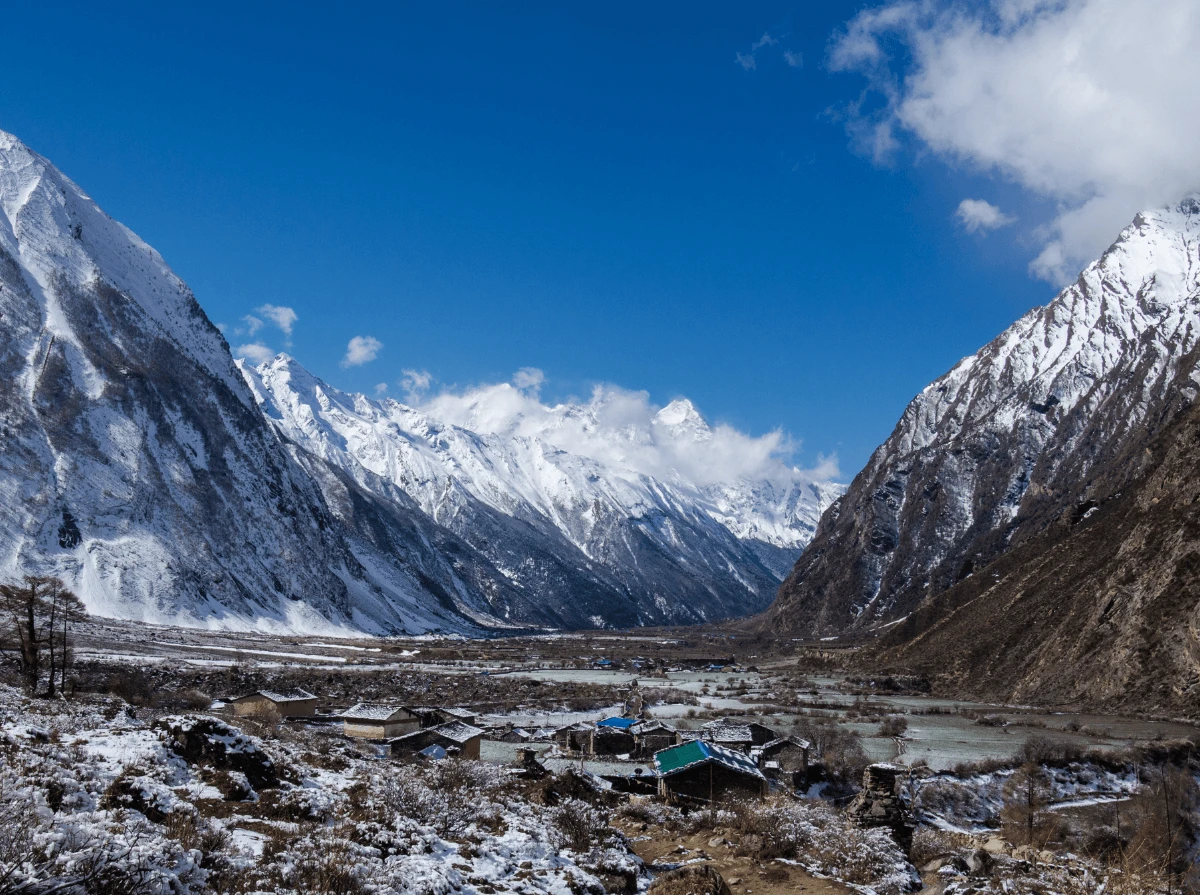
The trek from Nile to Mu Gompa is relatively short but filled with spectacular views. As you ascend, the landscape becomes more barren, with towering cliffs and snow-capped peaks surrounding you on all sides. The path winds through remote, high-altitude terrain where few trees grow, giving the area a stark and desolate beauty. You’ll pass more mani walls and chortens, a reminder of the deep Buddhist roots in the region. The trail is dotted with prayer flags fluttering in the wind, adding a spiritual vibe to the barren landscape.
Arriving at Mu Gompa by late morning, you’ll be welcomed by the sight of the ancient monastery, which has been a center of Tibetan Buddhist learning for centuries. You’ll have time to explore the monastery, interact with the resident monks, and soak in the incredible mountain views. The monastery is not only a religious site but also a cultural hub for the Tsum Valley, with a history that stretches back over 600 years. You’ll learn about the ancient Buddhist rituals, see sacred artifacts, and gain insights into the peaceful monastic life in this remote part of Nepal.
After lunch at the teahouse near the monastery, where you’ll enjoy traditional Tibetan dishes like thukpa or tsampa, you’ll embark on a short hike to the nearby Dhephyudonma Gompa at 4,060 meters. This ancient hermitage is even more remote than Mu Gompa and offers stunning views of the Ganesh Himal Range and Shingri Himal. The trail to Dhephyudonma is a bit challenging due to the altitude, but the breathtaking views and the spiritual atmosphere of the hermitage make it worth the effort.
After visiting Dhephyudonma, you’ll return to Mu Gompa for dinner and an overnight stay. The evening at Mu Gompa is a peaceful one, with the quiet of the mountains and the twinkling stars overhead creating a serene and meditative environment.
By noon, you’ll arrive at Rachen Gompa, one of the largest nunneries in the Tsum Valley. This beautiful site is home to over 80 Buddhist nuns who live in quiet devotion, practicing their faith and maintaining the monastery grounds. You’ll have the opportunity to explore the nunnery, observe the daily routines of the nuns, and learn more about the unique role that Rachen Gompa plays in the spiritual life of the valley. The nunnery is known for its intricate wall paintings and ancient scriptures, making it a fascinating place to visit for those interested in Tibetan Buddhist culture.
Lunch will be served at a teahouse near the nunnery, where you’ll enjoy a simple but filling meal of dal bhat, noodles, or thukpa. After lunch, you’ll have free time to relax and take in the peaceful atmosphere of Rachen Gompa, with its beautiful surroundings and spiritual energy.
Dinner is served in the evening, and you’ll spend the night in a cozy tea house near the nunnery, reflecting on the day’s journey and the rich cultural experiences you’ve had.
The path follows the Syar River for much of the way, with several suspension bridges crossing over the rushing water. The lush vegetation and the occasional sighting of wildlife make this trek a beautiful and rewarding experience. The people in this region are mostly subsistence farmers, growing potatoes, barley, and wheat on terraced fields that cling to the steep hillsides. You’ll pass several small villages where you can observe the daily lives of the local Tsumbas, who are known for their hospitality and strong Buddhist faith.
After a lunch break at a small teahouse along the trail, you’ll continue your ascent toward Gumba Lungdang, which is situated at 3,200 meters. This small monastery offers stunning views of the surrounding mountains and valleys, making it a perfect place for meditation and spiritual reflection. The monastery is home to a small community of monks who live in quiet seclusion, practicing their faith in the shadow of the mighty Ganesh Himal.
Upon arrival at Gumba Lungdang, you’ll have time to explore the monastery and interact with the monks, learning more about their way of life and the spiritual significance of the area. Dinner will be served at your tea house near the monastery, and you’ll spend the night in the peaceful surroundings of this remote Himalayan retreat.
You’ll leave Gumba Lungdang by 7:00 am, heading into the rugged and remote terrain that leads to the base of the Ganesh Himal Range. The trail is steep and rocky, with several river crossings and a challenging ascent through alpine meadows and forests. The higher you climb, the more barren the landscape becomes, with rocky outcrops and glaciers dominating the scenery. As you approach the Ganesh Himal Base Camp, the towering peaks of Ganesh Himal rise above you, creating an awe-inspiring backdrop for your trek.
After a packed lunch along the way, you’ll continue your ascent, finally reaching the Ganesh Himal Base Camp by mid-afternoon. The base camp offers stunning panoramic views of the surrounding peaks, including Ganesh I (7,422m), Ganesh II (7,118m), and Ganesh III (7,043m). The area is remote and rarely visited by trekkers, making it a perfect place for quiet reflection and a true connection with nature.
You’ll spend some time exploring the base camp and taking in the incredible views before beginning your descent back to Gumba Lungdang, where you’ll spend the night. Dinner will be served at your tea house, and you’ll have plenty of time to rest and recover after the long and challenging day.
You’ll pass through several small villages along the way, including Ripchet and Chumling, where you’ll have the opportunity to interact with the local people and learn more about their way of life. The trek is mostly downhill, with a few steep sections, and you’ll arrive in Lokpa by late afternoon, where you’ll spend the night in a cozy tea house.
By mid-morning, you’ll arrive in Jagat, a bustling village that serves as a gateway to the Tsum Valley and the Manaslu Conservation Area. Here, you’ll have the opportunity to explore the village, visit the local school, and learn more about the cultural and religious heritage of the area. The people of Jagat are predominantly Gurung and Tibetan, and their way of life has remained largely unchanged for centuries.
Lunch will be served at a teahouse in Jagat, where you’ll enjoy a traditional meal of dal bhat or Tibetan bread with butter tea. After lunch, you’ll have free time to relax or explore the village before dinner.
You’ll stop for lunch at a teahouse in Tatopani, where you can take a dip in the hot springs to soothe your tired muscles. After lunch, you’ll continue your descent, arriving in Khorlabesi by late afternoon.
Dinner will be served at a teahouse in Khorlabesi, and you’ll spend the night in a cozy room, reflecting on the incredible journey you’ve had so far.
You’ll pass through several small villages along the way, including Machha Khola and Labu Besi, where you can stop for a tea break and enjoy the warm hospitality of the local people. By noon, you’ll arrive in Soti Khola, where you’ll have lunch at a teahouse and take some time to relax before dinner.
You’ll stop for lunch at a roadside restaurant along the way, enjoying a traditional Nepali meal before continuing your journey to Kathmandu. By late afternoon, you’ll arrive in the bustling capital, where you’ll be dropped off at your hotel. The evening is free for you to relax, explore the city, or do some last-minute souvenir shopping.
Book Your Tsum Valley Trek – 18 Days for 2024 and 2025 with Overland Trek Nepal! We offer flexible departure dates to suit your schedule, whether you’re a solo traveler or coming with family. Discover the hidden beauty of the Tsum Valley, a sacred Himalayan pilgrimage site, with mesmerizing landscapes and rich cultural experiences. Led by our expert guides, enjoy a seamless journey with guaranteed departures. It’s best to book early to secure your spot and ensure a hassle-free adventure of a lifetime!
| Start | Finish | Availability | Price | |
|---|---|---|---|---|
| Sunday August 24, 2025 | Wednesday September 10, 2025 | Trip Status Guaranteed | Starting from $1299 | Book Now |
| Sunday August 31, 2025 | Wednesday September 17, 2025 | Trip Status Guaranteed | Starting from $1299 | Book Now |
| Sunday September 7, 2025 | Wednesday September 24, 2025 | Trip Status Guaranteed | Starting from $1299 | Book Now |
| Sunday September 14, 2025 | Wednesday October 1, 2025 | Trip Status Guaranteed | Starting from $1399 | Book Now |
| Sunday September 21, 2025 | Wednesday October 8, 2025 | Trip Status Guaranteed | Starting from $1299 | Book Now |
| Sunday September 28, 2025 | Wednesday October 15, 2025 | Trip Status Guaranteed | Starting from $1299 | Book Now |
| Sunday October 5, 2025 | Wednesday October 22, 2025 | Trip Status Guaranteed | Starting from $1299 | Book Now |
| Sunday October 12, 2025 | Wednesday October 29, 2025 | Trip Status Guaranteed | Starting from $1299 | Book Now |
| Sunday October 19, 2025 | Wednesday November 5, 2025 | Trip Status Guaranteed | Starting from $1299 | Book Now |
| Sunday October 26, 2025 | Wednesday November 12, 2025 | Trip Status Guaranteed | Starting from $1299 | Book Now |
| Sunday November 2, 2025 | Wednesday November 19, 2025 | Trip Status Guaranteed | Starting from $1299 | Book Now |
| Sunday November 9, 2025 | Wednesday November 26, 2025 | Trip Status Guaranteed | Starting from $1299 | Book Now |
| Sunday November 16, 2025 | Wednesday December 3, 2025 | Trip Status Guaranteed | Starting from $1299 | Book Now |
| Sunday November 23, 2025 | Wednesday December 10, 2025 | Trip Status Guaranteed | Starting from $1299 | Book Now |
Required Permits & Documents
- Tsum Valley special permit
- Your Passport & Nepal Visa copy
- Your Passport & Nepal Visa copy
- Your Passport & Nepal Visa copy
Meals & Snacks
- Three meals a day (Breakfast, Lunch, Dinner)
- Three meals a day (Breakfast, Lunch, Dinner)
- Three meals a day (Breakfast, Lunch, Dinner)
Accommodation
- Accommodation
- Accommodation
Staffs & Crew Member
- Government Licensed Holder, very well English speaking, Overland Trek Nepal experienced trekking Guide/ leader.
- All the Expenses (Accommodation, Food, Salary, Transport, Insurance, Medicin) of All Staff & Crew members
Transportation
- Airport pick-up and drop-off by private vehicle
- Airport pick-up and drop-off by private vehicle
Others
- Trekking Map
- Trekking Map
- Trekking Map
- Some Normal & emergency First aid Medical Kit
- Some Normal & emergency First aid Medical Kit
- Some Normal & emergency First aid Medical Kit
Excludes
- Personal Equipment
- Nepal entry visa fee, International airfare
- Tips for guide and porter (Tipping is expected)
- Lunch and dinner during your stay in Kathmandu
- Travel medical insurance and emergency evacuation cost
- Any other expenses that are not mentioned in the price include the section
- If need Porter per day 25 USD ( 1 Porter for 2 Trekkers and he will carry a total of 20kg)
- Personal expenses such as Alcoholic beverages, hot shower, water bottle, cold drinks, hot water, battery charge, donation, etc
Complimentary
- Trekking Pole/ Stick
- Overland Trek Nepal company T-Shirt & Cap
- One Portable Oxygen Cylinder (for emergencies)
- Nepali SIM Card, but the Data You Have to pay for
- 1-hour full-body Trekker’s massage after returning from the trek
Customize Your Tsum Valley Trek, Make It More Comfortable, Joyful & Unforgettable!
Planning your Tsum Valley Trek – 18 Days with Overland Trek Nepal? Great choice! But wait, here’s the secret sauce to elevate your journey to the next level: Add-ons designed just for you. From luxury hotel upgrades to seamless transport, private porters, guided Kathmandu city tours, and even local SIM cards – we’ve got it all.
When booking online, simply select the extras you’d like, and we’ll take care of everything. Because your comfort is our priority and your joy is our passion.
Hotel Upgrade Options in Kathmandu (With Breakfast)
Want to relax in comfort before or after your trek? Upgrade your stay at some of the best handpicked hotels:
- 4-Star Hotel – Single Room: USD 60/night
- 4-Star Hotel – Double Room: USD 70/night
- 5-Star Hotel – Single Room: USD 170/night
- 5-Star Hotel – Double Room: USD 210/night
Why upgrade:- Start and end your trek in luxury, recharge in style, and enjoy a peaceful night with warm hospitality and a delicious breakfast.
Kathmandu Cultural Sightseeing Tour – Full Day Experience
Discover the ancient magic of Kathmandu Valley with our guided full-day heritage tour. Includes Pashupatinath Temple, Boudhanath Stupa, Kathmandu Durbar Square, and Swayambhunath (Monkey Temple).
- Private Car (1-2 Pax) + Guide: USD 80 total
- Scorpio Jeep (up to 6 Pax) + Guide: USD 90 total
- Hiace Van (up to 12 Pax) + Guide: USD 120 total
Note:Entrance fees are not included.
Perfect for culture lovers, photographers, and explorers who want to connect deeper with Nepal’s spiritual roots.
Transportation Upgrades – Make Your Journey Smoother
Don’t need a private, peaceful ride? Choose from our ground transfer options for ultimate comfort:
- Kathmandu ➝ Sotikhola by Private Scorpio Jeep: USD 200 (Max 8 Pax) including Driver
- Sotikhola ➝ Kathmandu by Private Scorpio Jeep: USD 200 (Max 8 Pax) including Driver
Skip the stress, travel in comfort, and save time with flexible door-to-door service!
Porter Services – Let Us Carry the Load
Why struggle with a heavy backpack when you can trek freely?
- 1 Porter for 2 Trekkers: USD 25/day (Carries up to 20kg)
- Private Porter Available Upon Request: Same rate
Enjoy your trek, take more pictures, and feel the freedom of hiking light!
Rental Gear – Affordable, Reliable & Eco-Friendly
Don’t want to buy expensive trekking gear? Rent high-quality gear in Thamel, if needed. Help Overland Trek Nepal with you.
- Down Jacket (Used): USD 3/day
- Sleeping Bag (Used): USD 3/day
- Emergency Portable Oxygen Cylinder: USD 70 each
Budget-friendly and convenient for short-term trekkers.
Stay Connected by Local SIM with 5GB Data
Worried about staying in touch with your loved ones or updating your socials?
- Local SIM Card with 5GB Data: USD 10
Coverage depends on location, but it’s a smart choice for emergencies or social media lovers.
Why Overland Trek Nepal is Your Best Choice for the Manaslu Region Trekking?
At Overland Trek Nepal, we don’t just offer trips – we create once-in-a-lifetime, tailor-made trekking experiences. Our team understands the uniqueness of the Manaslu & Tsum Valley region, and we believe every traveler is different, so we help you design your dream journey.
- Easy online customization with add-ons
- Professional support before, during & after your trek
- Affordable prices, premium services
- Local experts with over a decade of experience
- 100% flexible itineraries with a personal touch
- We listen, we care, we make it happen!
Ready to Customize Your Tsum Valley Adventure?
Book online now, choose your favorite add-ons, and let us personalize your dream trek. With Overland Trek Nepal, every step is comfortable, joyful, and unforgettable.
Nepal Visa Procedure
Applying visa to Travel to Nepal is very easy. If Tsum Valley Trek is on your bucket list for the next adventure, you will need at least 30 Days of Visa. The visa procedure is very easy in Nepal as you can apply online or issue the visa after arriving at Kathmandu Airport. The 30-day Visa costs USD 45 for foreigners. Your valid passport with at least 6 months of validation is required to get a visa.
The ideal time to Visit Tsum Valley
Spring and Autumn are ideal times to visit Tsum Valley Trekking. During these times, the views are delightful, with clear weather and mild temperatures. Likewise, blooming flowers, rhododendron forests, and lush green hills make the journey tranquil. In the autumn season, the festival vibes along with the mountain views are delightful to watch.
However, if you are planning to visit Tsum Valley during the monsoon and winter seasons, be prepared for different challenges. In the winter season, there is a high possibility of snowfall and the bulk of snow can be an obstacle during the trek. Likewise, in the monsoon season, the lower part of the Manaslu Region receives a huge amount of rainfall.
Permit Card required for the Manaslu Region Trekking
Before you embark on a Restricted area like the Manaslu Region, permit cards are a must. Hence, Manaslu Conservation Area Project Permit and Restricted Area Permit cards are required for the Tsum Valley Trekking. However, if you follow the Manaslu Tsum Valley Trek Route, the trail ends at Annapurna Circuit Trekking Trail. So, an Annapurna Conservation Area Permit is also required for it.
To apply for the permit cards, you must provide us your original passport details and copies of your passport size photo with at least 6 months of valid date. Likewise, for a restricted permit card we need your visa or submission ID if you apply online visa.
Meals and Accommodation Facilities
Trekking in the Manaslu Region is a different kind of challenge. Hiking through the remote villages and rugged terrains can soak your energy. Hence, eating nutritious meals is very essential. Our guide makes sure that you eat healthy meals during the trek. Here is the list of meals available in Manaslu Region:
- Breakfast Items: Oatmeals, French Toast, Chapati, Tibetan Bread, Eggs, Pancakes, Muesli, Vegetable Soups, and Hot Drinks.
- Lunch and Dinner Items: Daal Bhat, Tibetan Bread, Soups, Steaks, Sandwiches, Momo, Pasta, Noodles, Thukpa, Potatoes Dishes, Salad, etc.
All the meals will be served in teahouses. The teahouses will be your accommodation during the whole trek. It has basic bedrooms on a sharing basis. Along the Tsum Valley Trekking Route, you can only find the basic hotel with a big dining hall. Moreover, at higher altitudes each teahouses have a common toilet and bathroom.
Trekking Gear and Packing List
Wondering what trekking gear is needed for Tsum Valley Trekking? Here are the lists of the gear you will need:
- Backpack: Top-quality trekking bag with at least 50-60 liters.
- Sleeping Bag: Good-rated sleeping bag with least -10 degrees Celsius.
- Warm clothes: Base Layers, T-shirts, fleece jackets, down jackets, Trousers, Gloves, Woolen Hat, and Thermals.
- Footwear: Hiking Boots and Flipflops.
- Miscellaneous: Battery Backup, Toiletries, Sunscreen, Head Lamps, First Aid, Snacks, Bars, etc.
When you do your packing, we suggest carrying only the necessary items you need during the trip. Overpacking may give you difficulties during the hike along the Tsum Valley.

Difficulty Level and Preparation for Tsum Valley Trekking
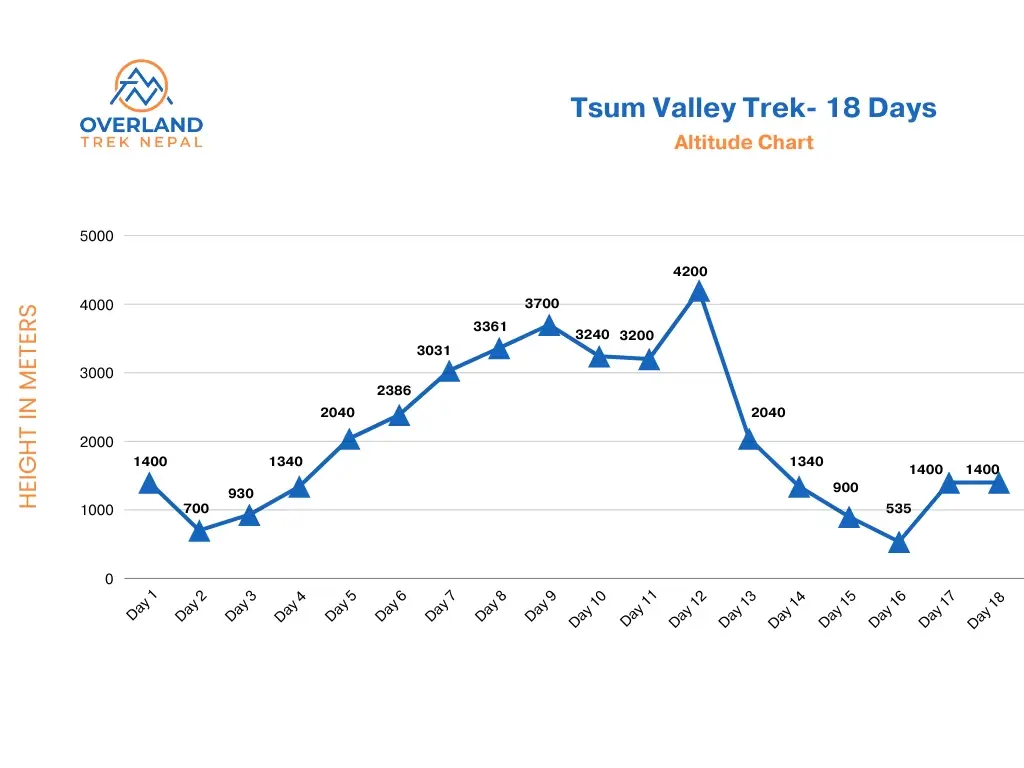
Trekkers must walk for 6-7 hours a day through the rugged and challenging trekking trail. Moreover, the trek will reach up to 3500 meters of height which can be a concern for altitude sickness. Even though the altitude is not as high as Larkya La Pass at 5106 meters, the trail is so challenging. Hence, a good level of fitness and stamina is required for this Tsum Valley Trekking.
To get rid of the Tsum Valley Trek difficulty, you must do proper preparation for the trip. Choosing the right time to embark on the journey is the first and most important. Likewise, before the start of the trek, we suggest doing cardio and strength workouts for at least 2-3 months. Also, choosing the best trekking agency Like Overland Trelk Nepal Pvt. Ltd. makes a huge difference in managing your logistics, trekking guide, permits, and transportation for the best trekking experience. Overland Trek Nepal is always here for you to deliver top-class service to make your journey unforgettable.
Altitude Sickness and Safety Concerns
Climbing above 3000 meters always can be a concern of altitude sickness. However, it is common to have a sickness during the high altitude ascend. During the Tsum Valley Expedition, there is less chance of getting mountain sickness. However, sudden weather changes, lack of stamina, and walking difficulty might lead to fatigue and tiredness. In this case, our team leader will always check on you and your health concerns throughout the journey.
So, what are the remedies to avoid acute mountain sickness during the Tsum Valley Trip? Throughout the trip, we suggest drinking at least 3-4 liters of water avoiding hard drinks. Likewise, eating nutritious and vegetarian meals provides you with enough energy during the hike. If you start to feel the symptoms of the sickness, make sure you get plenty of rest and acclimatize properly. In the worst-case scenario, we recommend taking Diamox or maybe even informing us about the recuse operation.
Is there an Internet Facility in the Teahouses during the Tsum Valley Trek?
Along the Tsum Valley Trek Route, the teahouses provide internet facilities at an extra cost. However, at higher altitudes, internet access may not be reliable and fast. Hence, you can also buy a local SIM card in Kathmandu before the trek.
Booking and Payment Procedure
To book the Tsum Valley Trekking Package, you can directly email us from our website link or contact our travel planner at +9779851138871 in What’s App. We can give you guidelines for the booking procedure once you reach out to us.
Likewise, for your booking confirmation, you must pay 20% as an advance so that we can make the reservation for your trip. And the rest of the payment you can do once you arrive here in Nepal. For the payment procedure, you can directly pay through our payment gateway from the website or transfer through the bank account. Here are our bank details and the information you need for the payment procedure.
FAQ's
Map
Chart
Client reviews
Review Requests
Enter a recent customer’s contact info and we’ll ask them to leave you a review.